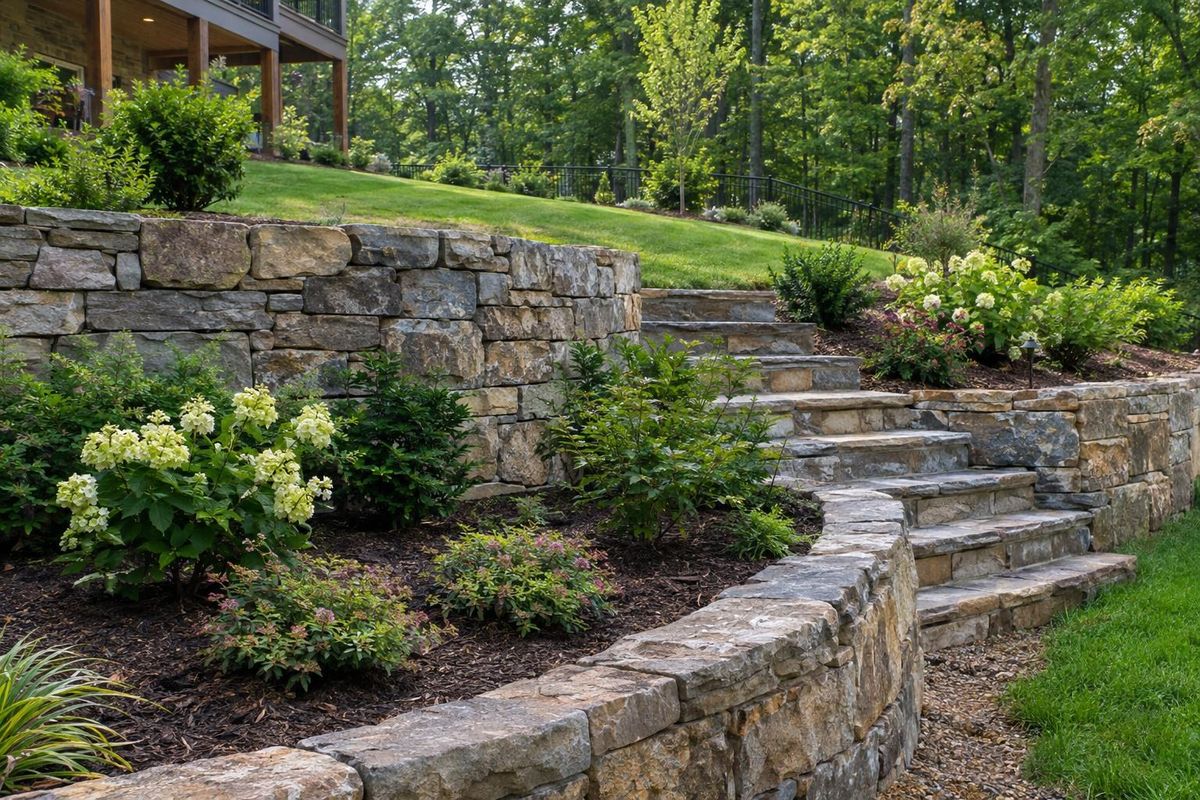
Key takeaways
- A retaining wall resists soil and water pressure, and water is the larger threat.
- A compacted stone base and clean gravel drainage behind the wall prevent most failures.
- Taller walls need reinforcement, and many need engineering and permits.
- Leaning, bulging and cracking are signs to act, not to wait.
How a retaining wall works
A retaining wall holds back a mass of soil that would otherwise slide or slump. The wall itself resists the push, and its weight, its base and its setback all help. Taller walls may use reinforcement layers that tie the wall back into the soil behind it.
Walls can be built from natural stone, segmental block, poured concrete or brick, and the right choice depends on height, appearance and ground conditions.
Why drainage matters most
Soil is heavy, and wet soil is heavier and pushes harder. In the clay soils around Nashville, water builds up behind walls quickly and slowly pushes them over. A perforated drain pipe at the base, surrounded by clean gravel and sloped to daylight, gives water a path out so pressure never builds up.
Surface drainage matters too. Downspouts and slopes that dump water onto the top of a wall add to the problem.
Base, footing and setback
Walls need a level, compacted base that will not shift, and the first course is buried partly below grade. Each course is set back slightly from the one below, which helps the wall lean into the soil. Rushing the base is the most common reason walls fail.
A wall also needs room: space for a gravel backfill zone, a drain and the reinforcement for taller walls.
Engineering, permits and repair
Walls over a few feet high, walls that carry loads such as driveways or buildings and walls near slopes or water often need engineering and a permit. Check local rules before designing, and ask your mason to coordinate with an engineer when it is needed.
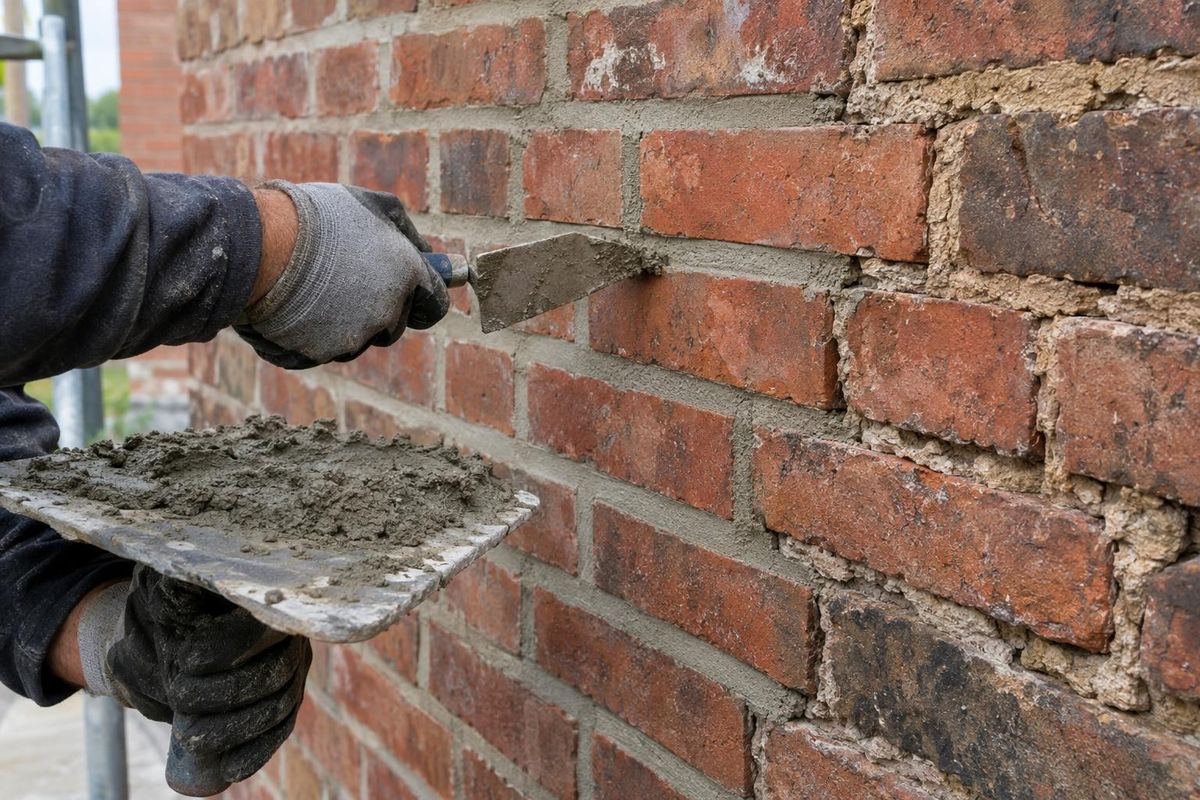
If a wall is already leaning or bulging, repair starts with drainage and the cause, not just resetting the stones.
Official sites to explore
Brand names and logos belong to their owners. These links open the official websites in a new tab, and we are not affiliated with them.
- National Concrete Masonry AssociationTechnical resources on concrete block, pavers and segmental retaining walls.
- Tennessee 811Call before you dig so underground utilities are marked.
- Metro Nashville Codes DepartmentPermits and inspections for Davidson County.
- Metro Water Services: StormwaterStormwater and erosion control information for Nashville.
- University of Tennessee ExtensionResearch-based guidance on soils, water, plants and home care in Tennessee.
Quick answers
How high can a wall be without a permit?
That varies by place. Many local codes require review above a few feet, so ask your local codes office before building.
Why is my retaining wall bulging?
Water pressure and a weak base are the usual reasons. Drainage and a rebuild of the affected section usually fix it.
Do I need a drain pipe behind the wall?
Almost always. Drainage is the most important protection a retaining wall can have.