Key takeaways
- The base under a patio matters more than the surface on top.
- Pavers lock together, flex with the ground and can be lifted and reset.
- Drainage should carry water away from the house and off the surface.
- Joint sand, edge restraint and light maintenance keep a patio tight.
What is under the surface
A patio is a stack of layers: compacted soil, a crushed stone base laid in lifts, a screeded bedding layer and the surface units. The base spreads loads, drains water and resists frost, and its depth depends on soil and use. Driveways need more than patios.
Skipping base depth or compaction is how patios develop low spots, wobble and ponding after a few seasons.
Choosing the surface
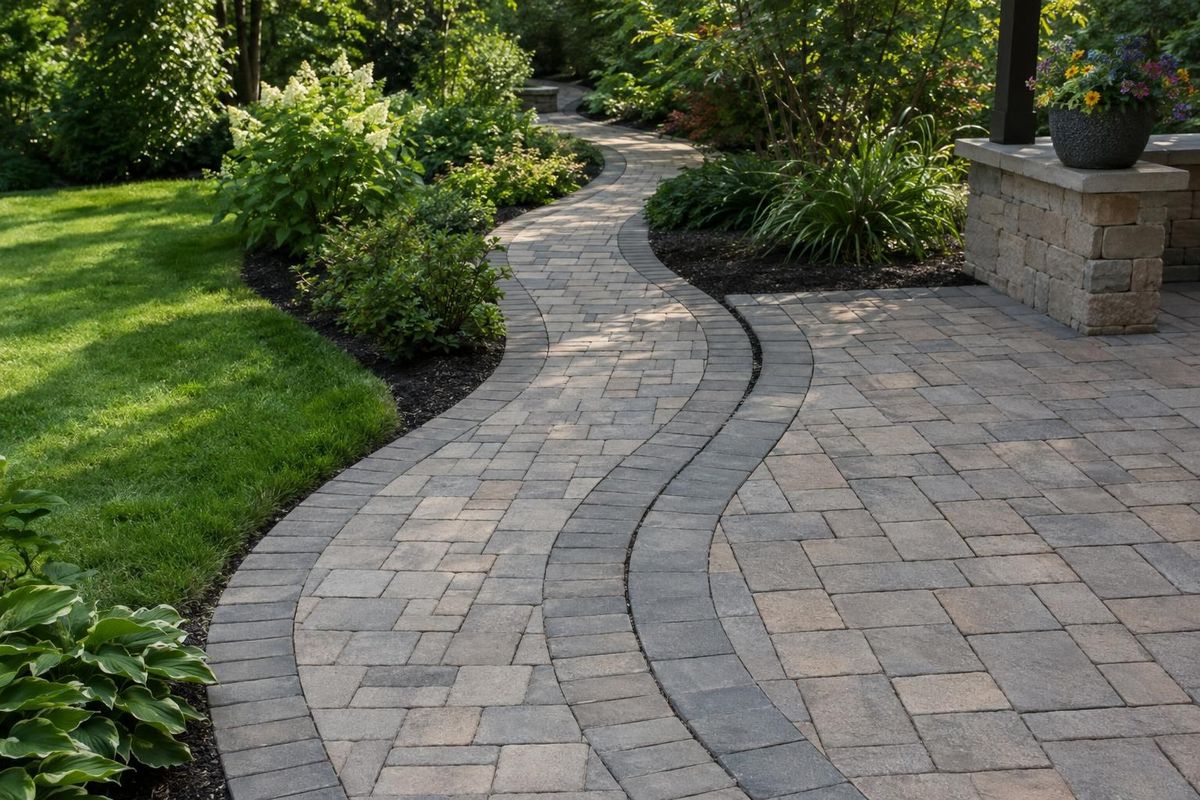
Clay brick pavers offer a warm, classic look and do not fade. Concrete pavers come in many shapes and colors and are strong and economical. Natural flagstone and cut stone give a more organic feel and wear beautifully, though they are often more labor to install.
Patterns such as herringbone are strong for driveways, and running bond and random patterns suit patios and walks. Borders and banding add polish.
Drainage and slope
Water should always drain away from the house, with a gentle slope of about a quarter inch per foot. Low spots, downspouts and walls that block flow can cause ponding and settlement. Sometimes a drain or a channel is the right answer.
In Nashville's heavy rain, getting runoff away from the base is a big part of keeping a patio level.
Joints, edges and upkeep
Joint sand locks pavers together, and polymeric sand hardens slightly to resist weeds and washout. Edge restraint stops the field from spreading. Sweeping, occasional re-sanding and prompt attention to weeds and stains keep the surface looking good.
If a unit settles or cracks, it can usually be lifted and reset, which is one of the benefits of unit pavers.
Official sites to explore
Brand names and logos belong to their owners. These links open the official websites in a new tab, and we are not affiliated with them.
- Interlocking Concrete Pavement InstituteGuidance on paver design, installation and maintenance.
- Brick Industry AssociationTechnical notes and design guidance on brick construction.
- Natural Stone InstituteInformation on natural stone, its uses and its care.
- Tennessee 811Call before you dig so underground utilities are marked.
- University of Tennessee ExtensionResearch-based guidance on soils, water, plants and home care in Tennessee.
Quick answers
How thick should the base be?
It depends on soil and use. Patios and walks need less than driveways, and we set the depth for your site.
Do pavers need sealing?
Not always. Sealing can enhance color and help with stains and weeds, but it needs to be reapplied. We explain the choice.
Why is my patio sinking?
A thin or poorly compacted base, poor drainage or washout are the usual causes. A reset on a proper base fixes it.