Key takeaways
- Water is the chimney's main enemy, and most damage starts at the top or at the roofline.
- A crown, a cap and proper flashing do much of the protecting.
- Cracked flue liners and damaged firebrick are safety issues, not just cosmetic ones.
- Have the chimney inspected before the first fire of the season.
The parts of a chimney
A masonry chimney has several parts that work together: the footing, the firebox, the damper, the smoke chamber, the flue liner, the brick stack, the crown, the cap and the flashing where it meets the roof. When one part fails, others suffer.
The brick and mortar keep the structure standing, the liner protects the masonry from heat and smoke, and the crown and flashing keep water out.
Common problems
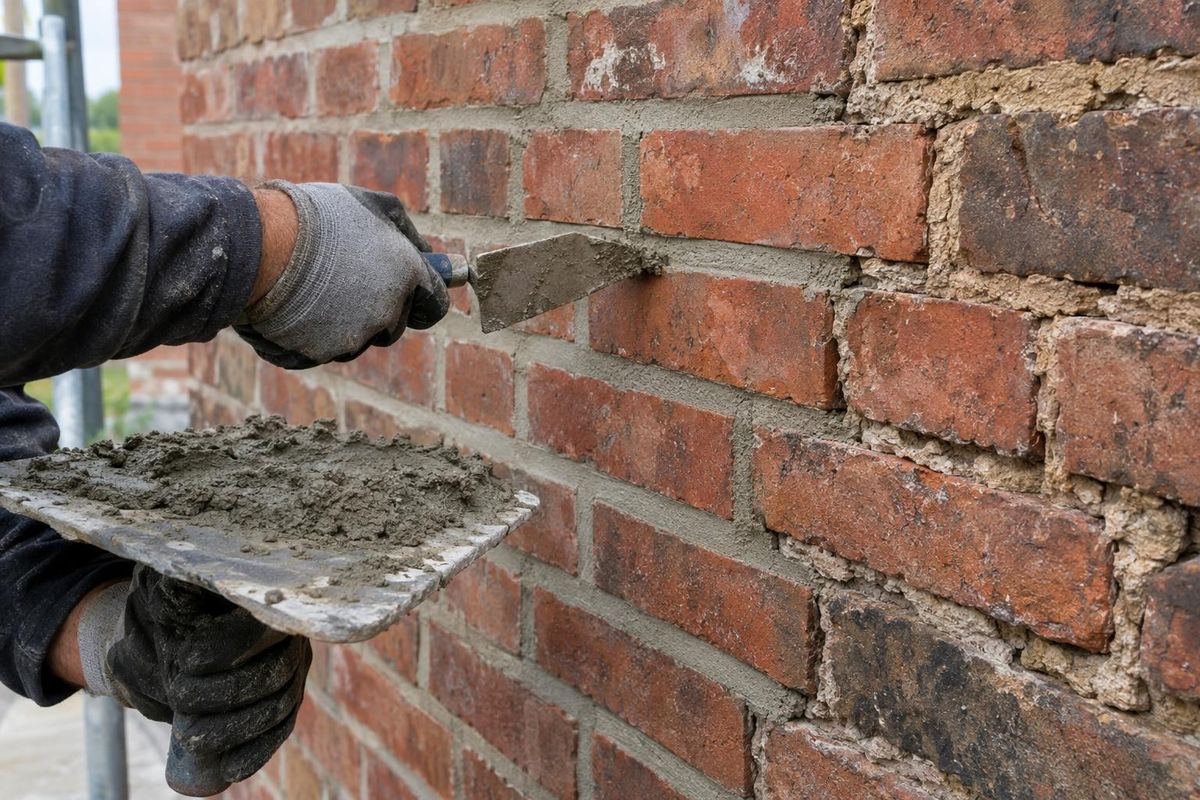
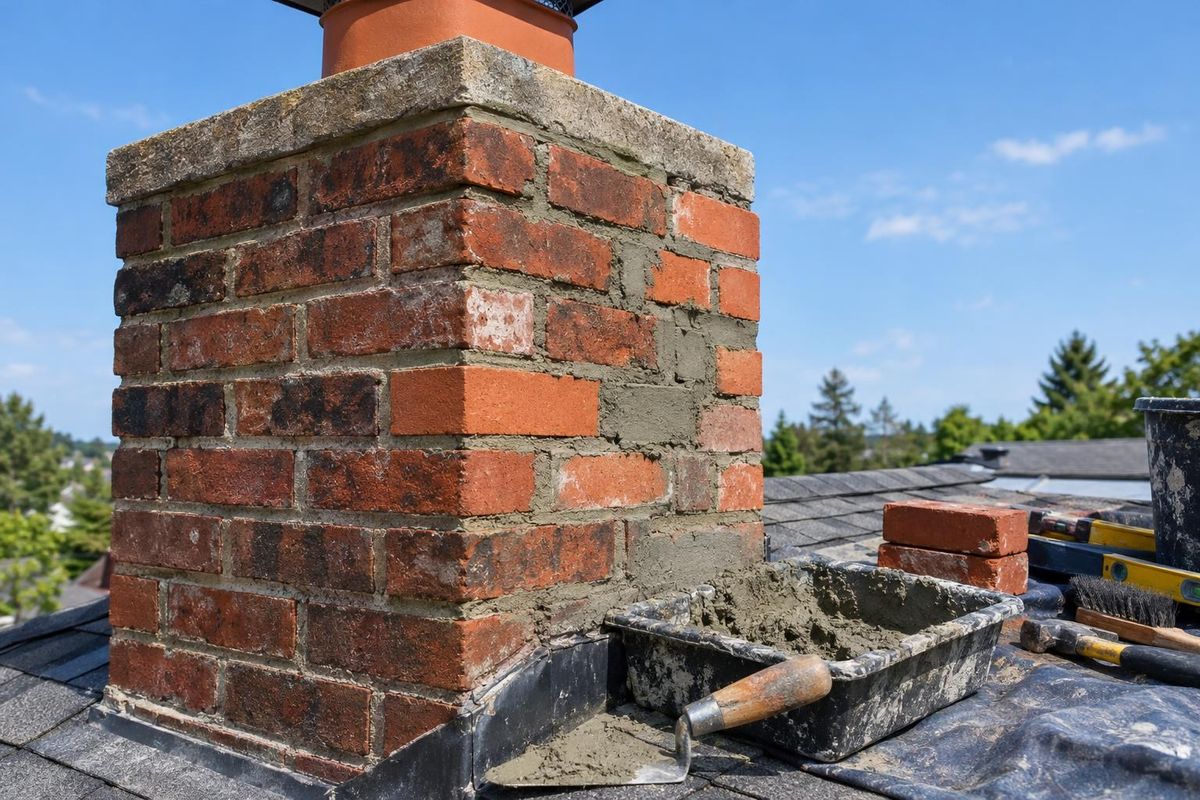
The most common problems are failed mortar joints, spalled brick, cracked crowns, open flashing and rusted dampers. Water enters at each of these, freezes in cold weather and breaks the masonry. A chimney that leans, or that has widespread crumbling, may need a rebuild.
Inside, firebrick can crack and the flue liner can split, which can let heat and smoke reach parts of the house that should be protected.
What to check each year
From the ground, look at the stack for loose or flaking brick, crumbling joints, white staining and a visible lean. Look at the crown for cracks, and at the cap for rust or damage. Inside the house, look for water stains near the chimney.
An annual inspection by a qualified professional is a common recommendation, and the masonry portion can be checked by a mason.
Before the first fire
Before using a fireplace for the season, have it inspected and cleaned if needed, make sure the damper opens and closes and the cap is in place. Never use a fireplace with a damaged liner or firebox. If a chimney has not been used for a long time, have it checked first.
Burn dry, seasoned wood, keep a spark screen in place and keep working smoke and carbon monoxide detectors in the house.
Official sites to explore
Brand names and logos belong to their owners. These links open the official websites in a new tab, and we are not affiliated with them.
- Chimney Safety Institute of AmericaChimney safety information and inspection standards.
- National Fire Protection AssociationFire and life safety codes, standards and public education.
- Brick Industry AssociationTechnical notes and design guidance on brick construction.
- Metro Nashville Codes DepartmentPermits and inspections for Davidson County.
- University of Tennessee ExtensionResearch-based guidance on soils, water, plants and home care in Tennessee.
Quick answers
How often should my chimney be inspected?
Once a year is a common recommendation, especially before the heating season, and after any storm or event that may have damaged it.
Why is my chimney leaking?
Common causes are a cracked crown, open flashing, failed joints or porous brick. We trace the water path to find the real source.
Can I use a fireplace with cracks in the firebox?
Small hairline cracks may be acceptable, while larger gaps need repair. Have it checked before lighting a fire.